






Required Courses
| Scientific Methodology and Academic Writing |
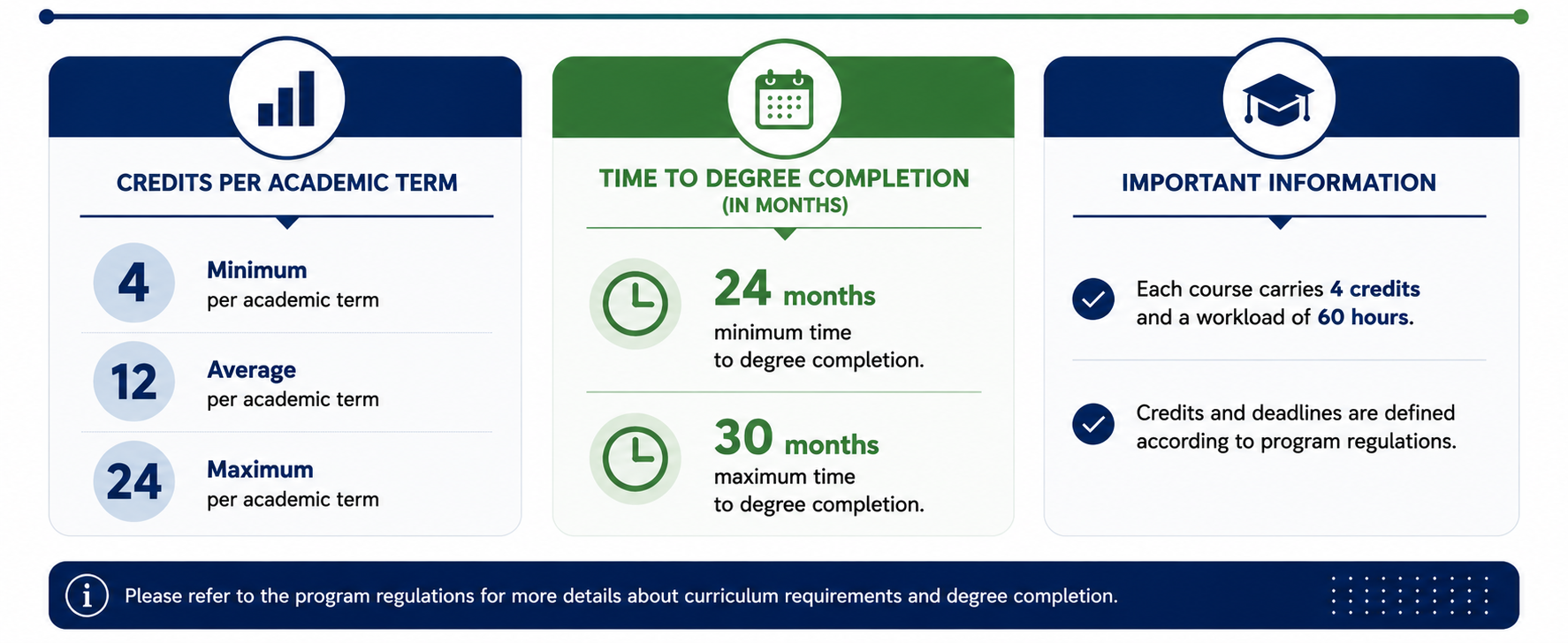
(4 credits, 60 hours) |
Syllabus: Scientific methodology applied to the health sciences, addressing essential aspects of study planning and execution through the publication of results in high-impact journals, including legislation and research ethics involving human beings and/or laboratory animals. Presentation of research seminars. |
| Higher Education in Health |
(4 credits, 60 hours) |
Syllabus: Higher education in health: the expansion of knowledge and problem-based teaching practice. The teaching–learning process: organization, development, assessment, and the roles of teachers and students. Methodological strategies with an emphasis on active teaching–learning methodologies. Neurosciences and education. Internship. |
| Biostatistics |
(4 credits, 60 hours) |
Syllabus: Exploratory data analysis. Descriptive statistics. Inferential statistics. Power analysis and effect size calculation. Use of statistical software packages for data analysis. |
Elective Courses
| Technologies Applied to the Human Movement Sciences |
(4 credits, 60 hours) |
Syllabus: Use of technologies for the assessment and treatment of human motor function: surface electromyography, kinemetry, force and pressure platforms, dynamometers, load cells, electronic goniometers, applications, and other electronic devices for biofeedback. |
| Human Motor System: Executive and Non-Executive Processes |
(4 credits, 60 hours) |
Syllabus: Addresses the neurophysiological characteristics of executive processes of motor and postural control in dynamic and static situations. Mechanisms of postural control and actions such as reach-to-grasp. Covers non-executive processes of the motor system, including imitation, understanding, recognition, and prediction of action, among other cognitive processes. |
| Exercise Neuroscience |
(4 credits, 60 hours) |
Syllabus: Physical exercise alters molecular and cellular mechanisms that modify the morphology and functioning of the nervous system. Examination of the relationships between exercise and cognition across the lifespan under altered conditions. |
| Injuries in Sports and Physical Activity Practice |
(4 credits, 60 hours) |
Syllabus: Addresses different facets related to research on sports and physical activity injuries, including multifactorial aspects, mechanisms, causal models, and types of epidemiological studies. |
| Physiotherapeutic Interventions in Respiratory and Cardiovascular Disorders |
(4 credits, 60 hours) |
Syllabus: Study of the main resources, methods, and protocols used in physiotherapy for preventive and therapeutic interventions in respiratory and cardiovascular system disorders across different population groups and levels of health care complexity. |
| Assessment Instruments in Respiratory and Cardiovascular Physiotherapy |
(4 credits, 60 hours) |
Syllabus: Study of different assessment strategies related to the functional performance of the respiratory and cardiovascular systems across different population groups and levels of health care complexity. |
| Exercise Physiology |
(4 credits, 60 hours) |
Syllabus: Functions and adaptations of physiological, neuromuscular, and cardiovascular systems to training. |
| Advanced Studies in Exercise and Physical Disability |
(4 credits, 60 hours) |
Syllabus: Physical disability. Spinal cord injury. Physiological adaptations to spinal cord injury. Exercise adaptations for people with disabilities. Use of exercise guidelines for people with disabilities. Effects of sports practice in people with physical disabilities. |
| Epidemiology of Physical Activity and Health |
(4 credits, 60 hours) |
Syllabus: Introduction to epidemiology. Epidemiological terminology specific to physical activity. Interpretation of data and specialized literature in human movement studies. Physical activity and public health. Spatial epidemiology and its potential applications in physical activity and health epidemiology. |
| Psychological Dimensions of Sport |
(4 credits, 60 hours) |
Syllabus: The origins of sport psychology. Integration of sport psychology with other sciences. Relationships between sport and cognitive, behavioral, emotional, and social aspects. Factors influencing sports participation. Psychological dimensions of sport and their relationship to athletic performance. |
| Epistemological Foundations of the Movement Sciences |
(4 credits, 60 hours) |
Syllabus: Philosophical knowledge concerned with the validation, structuring, and support of knowledge in a logical and rational manner. Description of theories of knowledge. Validity and types of knowledge. Limits and origins of knowledge. Duality between fiction and reality. The possibility of knowledge and total and genuine knowledge. Stages and limits of human knowledge. Relationships between the subject and the object of knowledge. Ways of attaining knowledge and the logical consistency of theories. Analysis of the philosophy of science. Ethical and moral issues in the acquisition of knowledge. Health epistemology. Evidence-based health practices. Bioethics applied to the health sciences and movement science. Philosophical and practical application of epistemological foundations to topics relevant to the movement sciences. |